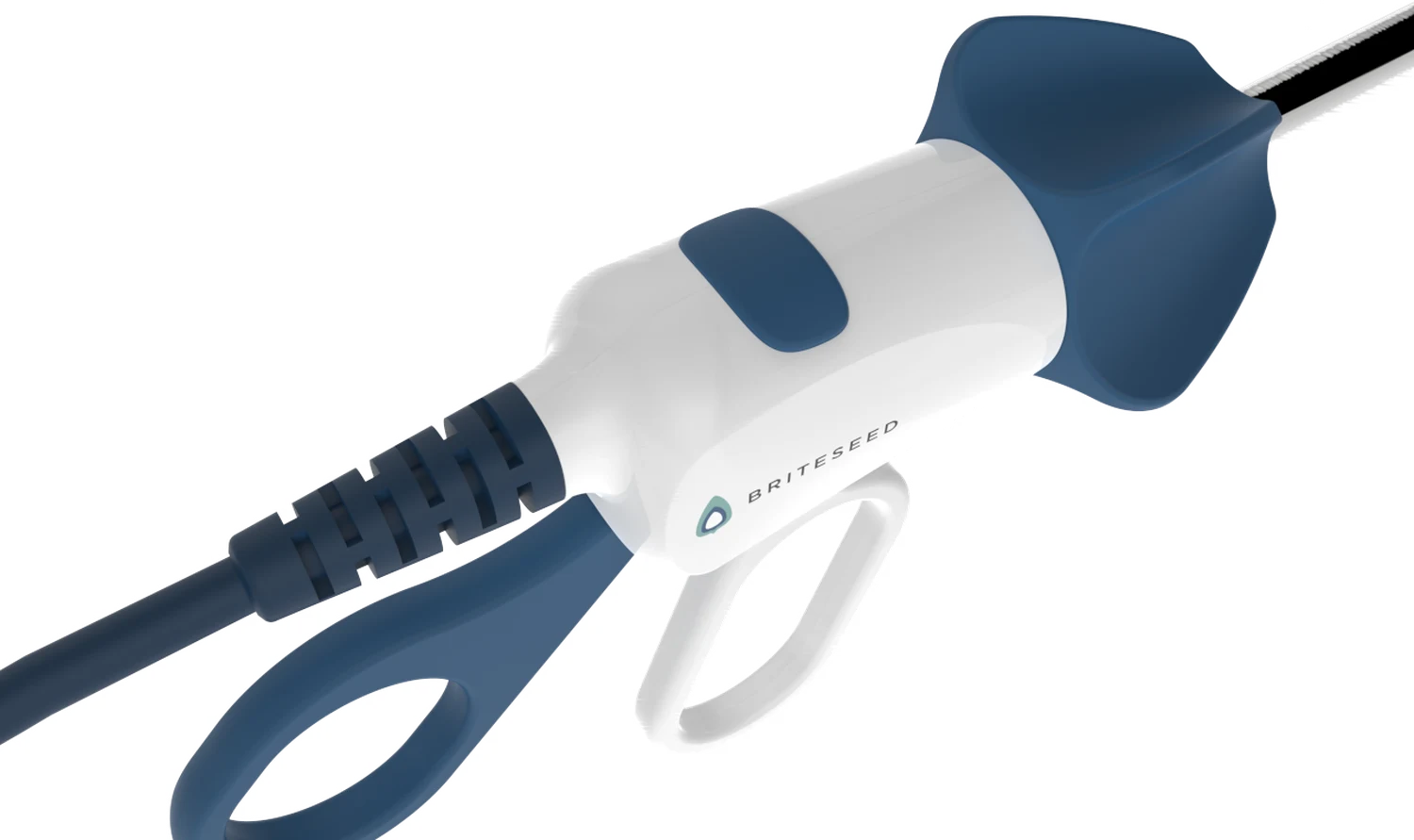
in.SPECT GrasperFirst of a family of tools
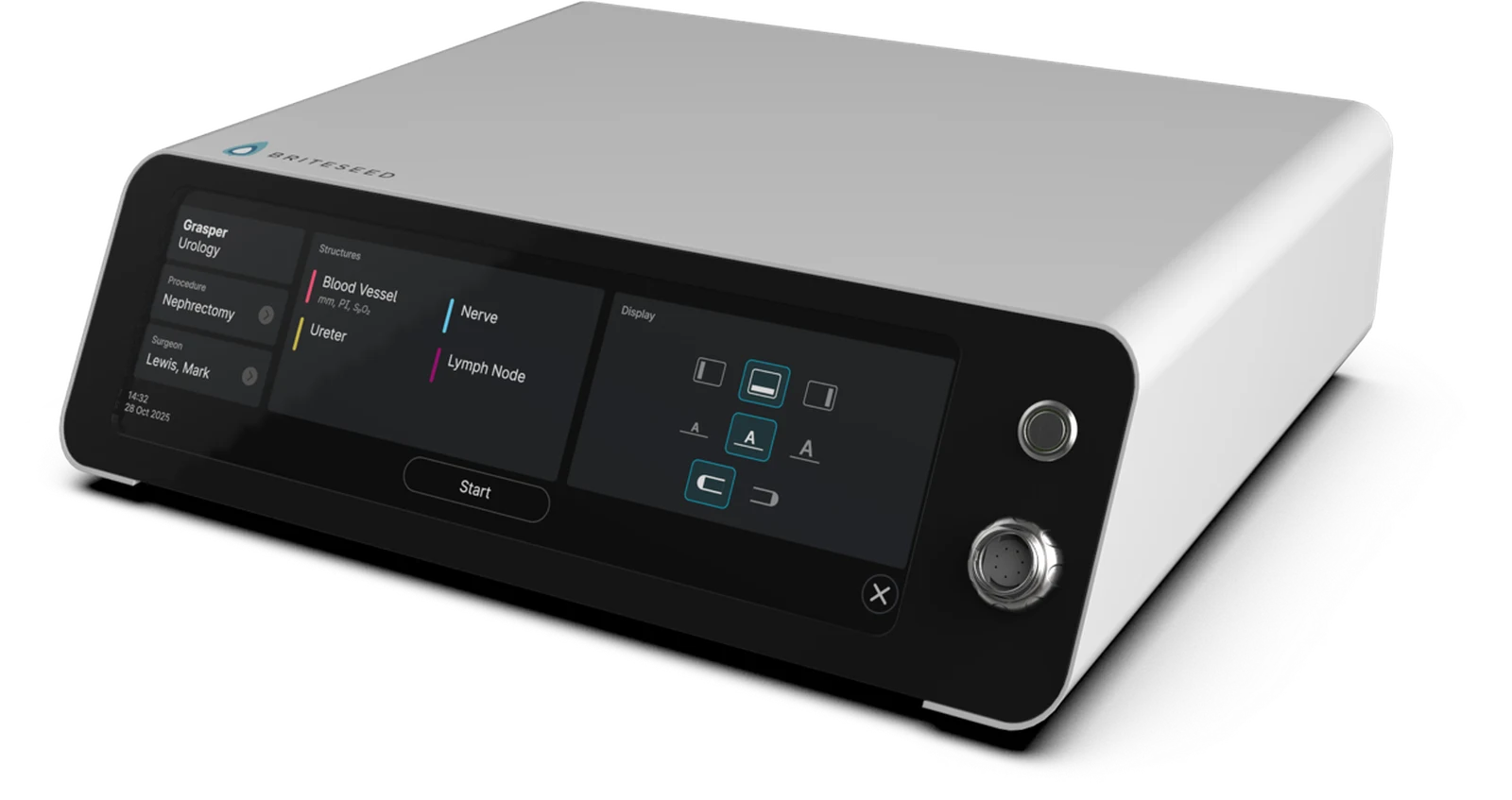
Edge Processing UnitOne engine for every instrument
Meet the platform
The gaps surgeons describe all come down to identification. Briteseed is built to close them.
Building deep-tissue intelligence for surgery: hidden ureters, vessels and nerves, identified in real time.
As we continue to broaden the application of minimally invasive surgical techniques, a new form of ureteral identification and avoidance that does not rely on tactile feedback is needed.
There are currently no approved intraoperative agents to aid in the visual identification of nerve structures.
Bleeding complications due to vascular injuries represent an important cause of morbidity and mortality, especially when facing major bleeding during laparoscopy, where bleeding control can be technically challenging in inexperienced hands.
Hyperspectral optics shine light between the jaws, identifying critical structures in real time, so surgeons know what they're holding before they cut, seal or staple.
The gaps surgeons describe all come down to identification. Briteseed is built to close them.